
by: Joycelyn P. Ituriaga
The College of Business Administration proudly celebrates two remarkable achievements by its 3rd Year Digital Marketing students at the LIWLIWA YA SURSURO 2.0: Baguio Youth Innovation Challenge, a prestigious program that nurtures creative, community-based solutions to urban safety and inclusion issues.
Selected Innovators: Aeroponic Greenhouse Project
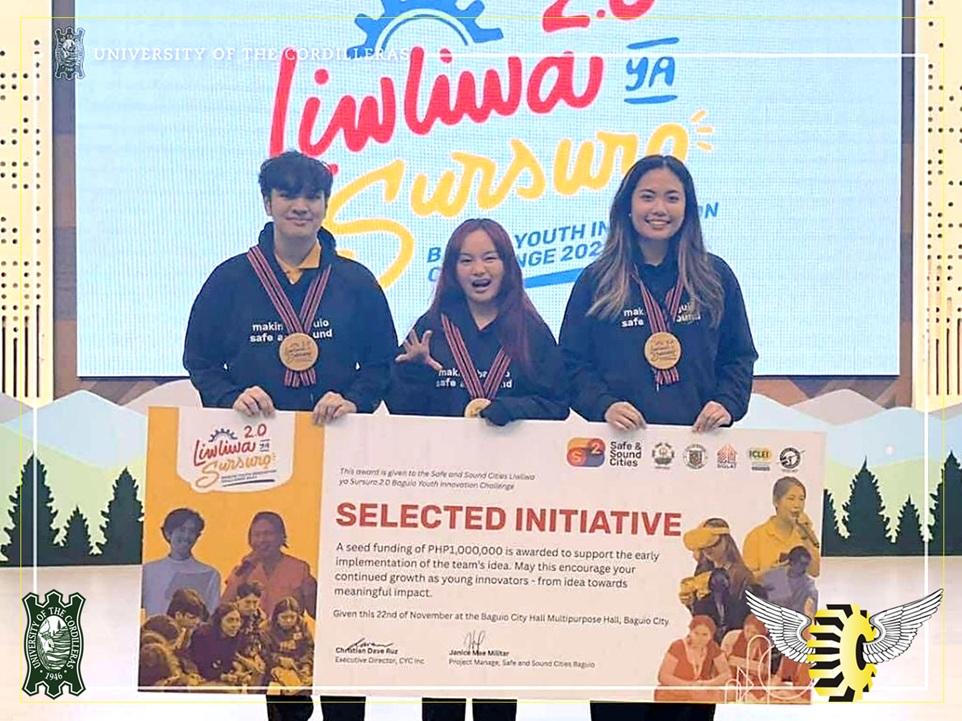
Brianna G. Encarnacion, Anny Carl D. Tegwa, and Russel Allen D. Treptor, guided by their mentor Mr. Yendell James V. Ortiz were officially selected as innovators in LYS 2.0. Their project, an Aeroponic greenhouse system, addresses food security challenges in Baguio by enabling communities to grow their own produce sustainably, especially during calamities when food prices fluctuate.
As selected innovators, the team will receive ₱1,000,000 seed funding to begin turning their idea into real, community-impacting action. This recognition was awarded on November 22 at the Baguio City Hall Multipurpose Hall.
Top 7 Recognition: Creative Community Innovation
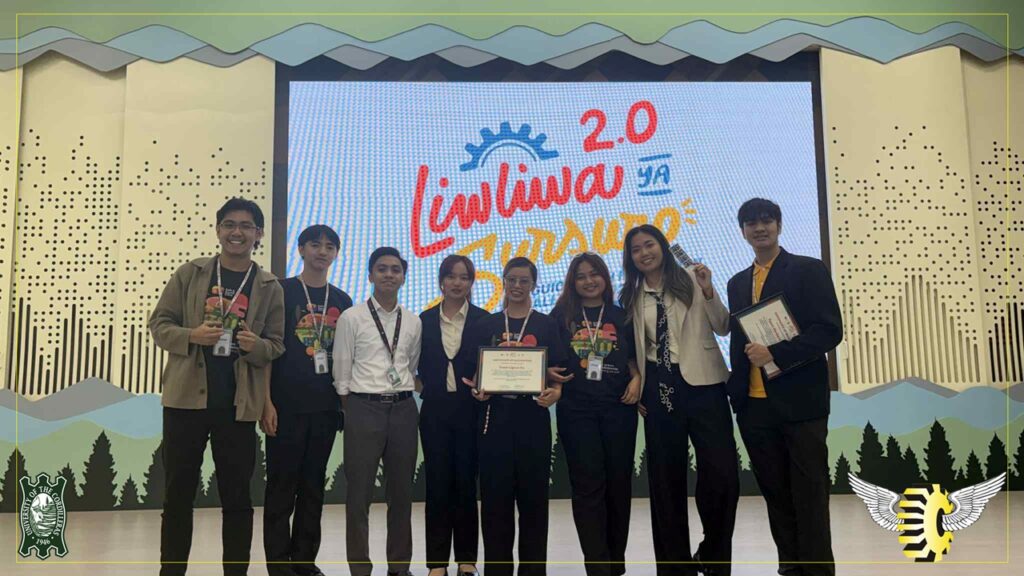
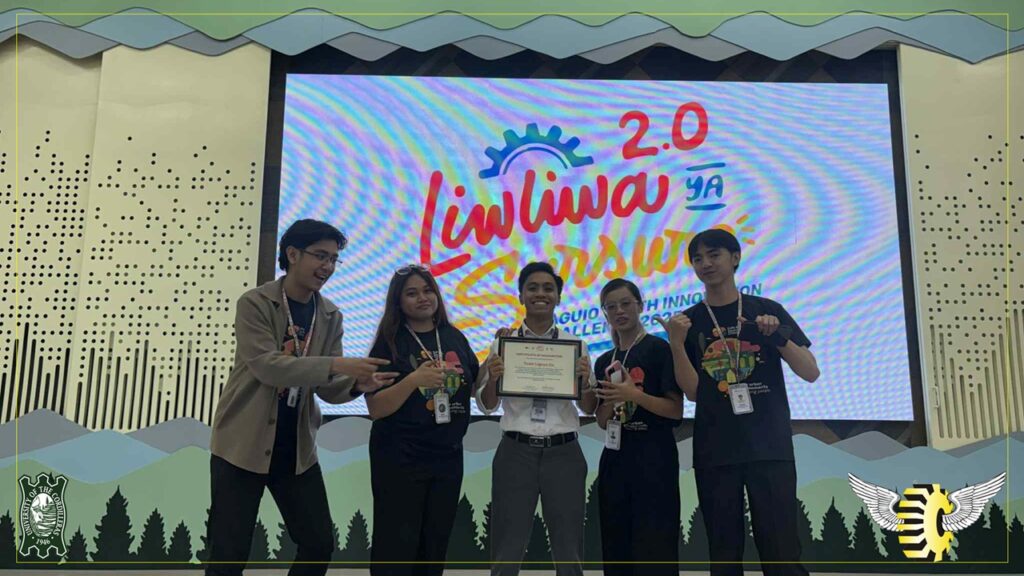
Another proud moment came as Jhoy Lyn T. Habbling, Tristan M. Locquiao, Jules Danford D. Oya, and Sofia Bianca U. Rodriguez, also mentored by Mr. Yendell James V. Ortiz, secured a spot in the Top 7 of LYS 2.0. Their project stood out for its creativity, relevance, and commitment to community innovation, earning recognition during the same awarding ceremony.
Voices of the Innovators
For Brianna, Anny, and Russel, the journey into LIWLIWA YA SURSURO 2.0 began with hesitation. They admitted that at first, they weren’t sure if they should join. But everything changed after attending the Caravan session, where they saw the tangible impact of the program’s first round. “We were first hesitant to join, but seeing the help and good that came from the first LYS inspired us to achieve the same level of impact for struggling communities here in the city,” they shared.
Their idea was born out of lived experience. Typhoons repeatedly battered Baguio, disrupting food supply chains and driving up the prices of vegetables. Families struggled to afford basic produce. The team asked themselves: what if communities could grow their own food, independent of market fluctuations? That question led to their proposal of an Aeroponic greenhouse system, a modern solution designed to strengthen food security and resilience.
The road to the competition was not without challenges. Meeting other competitors and witnessing their innovative ideas created pressure and doubt. “The most difficult part was dealing with the pressure once we saw firsthand the other projects. We overcame it by believing in our idea and working on it until it was something we were proud of,” they recalled.
Teamwork became their anchor. With only three members, they divided responsibilities based on individual strengths, one focused on pitching, another on visuals, and another on research. Yet what truly sustained them was their decision to work together, side by side. “There was a time we were exhausted and thought of giving up. But we found resolve only when we worked as a group. Being in each other’s company kept us motivated enough to finish the proposal,” they said.
Their vision is clear: a community where families no longer worry about food during disasters, and where the youth actively engage in sustainable practices. As Brianna put it, “Always strive with the purpose to be of service to the community around you.” Russel added, “Don’t let failure get you down; it’s only another step on the path to success.” And Anny emphasized, “Act on your ideas. Innovation becomes real when you take action.”
Mentor’s Reflections
For mentor Mr. Yendell James V. Ortiz, the students’ idea immediately stood out. “Their concept sparked my curiosity and excitement. It was clear they were passionate about solving a real problem,” he recalled.
His guidance focused on helping them clarify their objectives, strengthen their research, and align their proposal with genuine community needs. He asked critical questions, encouraged deeper validation, and ensured they remained grounded in feasibility while still exploring creative solutions. “Mentorship is not about dictating what they should do. It’s about empowering them to speak their minds, make decisions, and take ownership of their innovations,” he explained.
Reflecting on their journey, Mr. Ortiz highlighted the team’s strongest asset: their passion. The project had roots in their feasibility study, was enhanced in their marketing subject, and further refined in their business research. This three-stage development gave their proposal depth, validation, and a well-rounded foundation.
For him, the most rewarding part wasn’t the recognition itself but the journey they shared. “We built values together, connected on a personal level, and formed a relationship that went beyond the project,” he said.
Impact & Vision
The team envisions a future where communities are resilient against natural disasters, empowered to secure their own food, and actively involved in sustainable practices. With the seed funding, their first steps will focus on building partnerships with experts in agriculture and construction to ensure feasibility and long-term impact.
Reflections & Achievements
Together, these achievements reflect the College of Business Administration’s values of innovation, creativity, and social contribution, proving that CBA students are future-ready leaders capable of creating meaningful impact.
SDG Alignment
This achievement contributes to the United Nations Sustainable Development Goals (SDGs):
- SDG 2: Zero Hunger – Indicator 2.1.2 (Prevalence of moderate or severe food insecurity) and 2.4.1 (Proportion of agricultural area under productive and sustainable agriculture).
- SDG 11: Sustainable Cities and Communities – Indicator 11.3.2 (Proportion of cities with a direct participation structure of civil society in urban planning and management).
- SDG 13: Climate Action – Indicator 13.1.1 (Number of countries with national and local disaster risk reduction strategies), reflected in community resilience to typhoons and climate shocks.
- SDG 8: Decent Work and Economic Growth – Indicator 8.6.1 (Proportion of youth not in education, employment, or training), addressed through youth empowerment in innovation
Congratulations to our innovators and Top 7 achievers!
Your hard work, vision, and passion have truly paid off. May these achievements inspire even greater impact ahead.
#WeBleedYellow
Original Post by Gabriel R. De Guzman:
https://www.facebook.com/CBAWeBleedYellow
Top 7
Photo courtesy of Mr. Yendell Ortiz